Buying in Tucson and wondering how CC&Rs could shape your day-to-day life and long-term plans? If you care about privacy, views, low water use, or building a custom home, those rules matter more than you think. In this guide, you will learn what CC&Rs are, how they operate in Arizona, and the exact steps to review them for homes and lots across Tucson and Pima County. Let’s dive in.
What CC&Rs are in Arizona
CC&Rs are recorded property rules that “run with the land,” which means they bind current and future owners until they are properly amended or expire. In the Tucson area, these documents are recorded with the Pima County Recorder. CC&Rs often sit alongside other governing documents, including bylaws, articles of incorporation, community rules, and architectural guidelines.
CC&Rs are private contracts enforced through property and contract law. They commonly allow associations to issue notices and fines, suspend certain privileges, and place a lien for unpaid assessments. In Arizona, associations can have lien and, in some cases, foreclosure rights for unpaid common assessments, subject to state law and the recorded declaration.
CC&Rs work together with city and county codes. A CC&R can be more restrictive than local law, but it cannot allow something local law prohibits.
How CC&Rs affect Tucson buyers
Architectural controls and ARC reviews
Most communities require you to submit exterior changes to an Architectural Review Committee. Plans for additions, pools, fencing, paint colors, major landscaping, or solar are often reviewed against published standards. You should confirm submittal requirements, review timelines, appeal or variance options, and whether licensed professionals must prepare plans.
Landscaping and water-wise rules
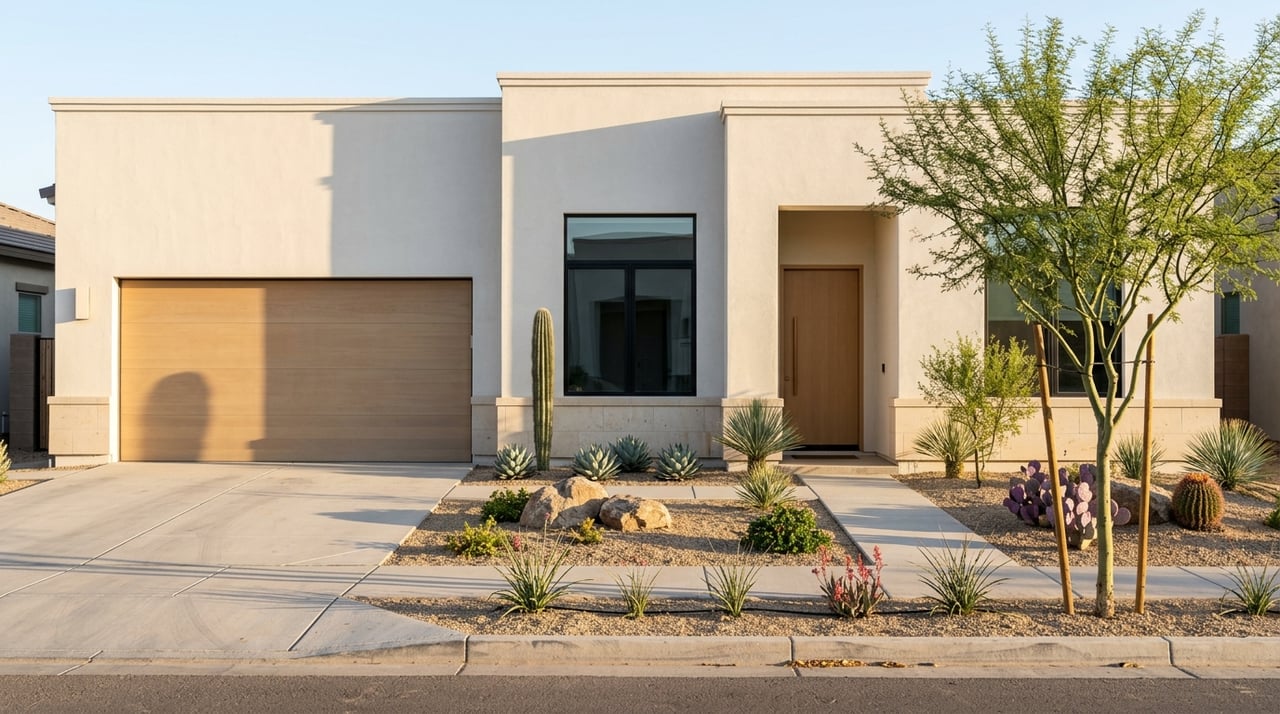
Many Tucson CC&Rs address front-yard design, irrigation, turf, and plant choices. Newer rules often align with water-wise xeriscape practices, while older declarations may be more prescriptive. Check if the association manages common-area irrigation and how those water costs are covered.
Exterior materials, walls, and fences
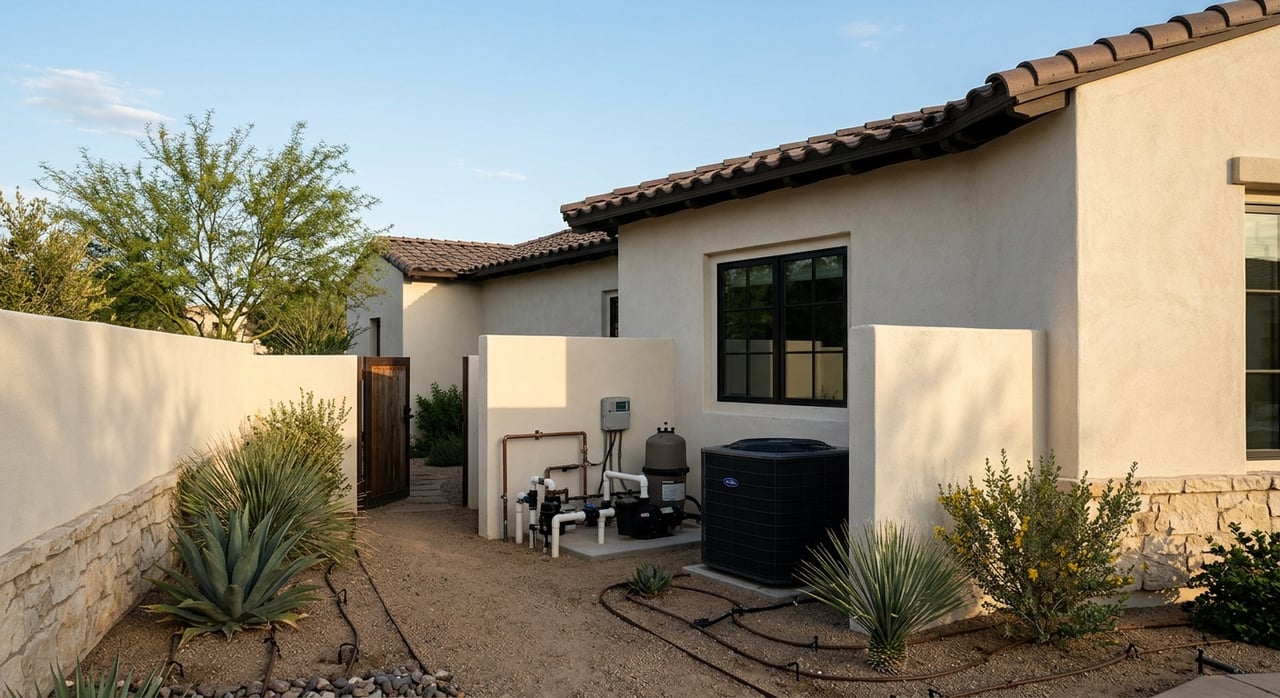
Expect standards for exterior finishes, roof materials, and wall or fence height and placement. In foothills or hillside settings, rules often protect view corridors. If your lot includes slopes, arroyos, or retaining walls, confirm whether you need ARC approval and possibly engineering sign-off.
Lighting and dark-sky standards
Tucson has a strong dark-sky culture. Some CC&Rs require shielded fixtures, lumen limits, and motion sensors to reduce light pollution. These rules may be stricter than city or county lighting codes, so plan exterior and security lighting accordingly.
Solar, EV charging, and modern systems
CC&Rs increasingly address solar panels, satellite dishes, and EV chargers. While associations cannot unreasonably prohibit solar under evolving state policies, you may have placement, color, or screening requirements. Always review the declaration and ask how the ARC has handled recent solar or EV requests.
Pools, casitas, and accessory structures
Pools, detached guest spaces, shade structures, and outdoor kitchens typically require ARC approval. Setbacks, fencing, and drainage are common review points. Plan your design with those standards in mind to avoid delays.
Parking, vehicles, and home businesses
Many CC&Rs limit on-street parking, RV or boat visibility, and commercial vehicle storage. If you have multiple vehicles or a home-based business, verify what is allowed before you buy.
Rentals and short-term rentals
Rental rules vary widely. Some communities allow rentals with minimum lease terms, while others restrict or prohibit short-term rentals. Check the declaration and any later rules for current restrictions and registration requirements.
Pets and animals
Rules often limit the number and type of animals, and set standards for enclosures. In semi-rural or custom-lot areas, CC&Rs may outline whether horses or agricultural uses are allowed and how facilities must be maintained.
Maintenance and lot appearance
Declarations typically require owners to keep lots to a community standard. Associations may have the right to remedy visible violations and assess the cost. Review the maintenance language so you understand your responsibilities.
Assessments, fees, and reserves
CC&Rs set the framework for dues, late fees, and special assessments. Strong reserves and clear budgets help avoid surprise costs. Look for any transfer fees, capital contributions, or one-time fees that apply at closing or for new construction.
Tucson and Pima County considerations
Hillsides, washes, and drainage
Many Tucson properties sit on slopes or near natural washes. CC&Rs often require erosion control measures, defined building envelopes, and drainage plans that do not alter natural flow. Expect heightened standards for grading and retaining walls in hillside areas.
Views and scenic protection
In foothills and custom-lot neighborhoods, view preservation is a common goal. That may affect where and how you can build, how high walls can be, and even what trees you plant.
Master associations and sub-associations
Master-planned communities often include a master association for amenities plus sub-associations for individual neighborhoods. You should review both sets of documents, budgets, and rules so you understand all obligations and fees.
Enforcement, governance, and financial health
Associations generally use a step-by-step enforcement process that can include notices, fines, suspension of privileges, recorded liens, and foreclosure for unpaid assessments, subject to Arizona law. Ask for the fee schedule and written procedures so you know the timeline.
Financial health matters. Review the current budget, recent financials, reserve study if available, assessment history, insurance coverage, and any audits. Red flags include repeated special assessments, low reserves, high delinquency rates, and significant ongoing litigation. Also check board authority and owner voting thresholds for amendments so you know how easily rules can change.
Due diligence checklist for Tucson buyers
Request these items during your inspection period and before closing:
- Full recorded Declaration of CC&Rs with all amendments, plus any master or sub-association declarations.
- Bylaws, Articles of Incorporation, and current community rules and regulations.
- Architectural guidelines and an example ARC application packet.
- Current budget, most recent financial statements, and any reserve study.
- Assessment ledger for the property and the current assessment amount and billing cycle.
- Estoppel or resale certificate showing outstanding assessments, fees, and known violations.
- Association insurance summary and your personal insurance responsibilities.
- Board meeting minutes for the past 12 to 24 months.
- Any pending litigation, violation notices, or major projects and funding plans.
- Copies of recent ARC approvals in the community to gauge review standards.
- Public records for easements or recorded restrictions affecting the lot.
- Local code references for outdoor lighting, water use, drainage, and hillside construction that may interact with CC&Rs.
Smart trade-offs and buyer strategies
Buying in a community is about balance. Gated or amenity-rich neighborhoods often deliver security and upkeep, but with stricter rules and higher fees. Strong ARC standards protect visual continuity and values, yet limit design flexibility. Healthy reserves create financial stability, but special assessments can still happen.
Use these strategies to protect your plans:
- Review CC&Rs and ARC rules early and build a contingency into your offer if needed.
- Map your wish list: pool, casita, solar, fencing, gates, and privacy landscaping. Confirm what is allowed and what approvals are required.
- Ask about precedent. Recent ARC decisions reveal how the community applies its standards.
- Check enforcement history. Minutes and violation logs show how actively the board enforces rules.
- For new builds or custom lots, seek pre-approved variances or documented ARC feedback on your initial concept.
- Make sure estoppel or resale certificates are delivered before closing and that seller disclosures address compliance.
- For complex plans, consult an architect or attorney familiar with Arizona CC&Rs and HOA practice.
Planning a custom home or equestrian property
If you are targeting a custom lot in southeast Tucson or the foothills, ARC standards may be more site specific. Expect guidance on view corridors, grading, and desert preservation, along with lighting and water-wise landscaping. Equestrian or acreage properties may add rules for barns, arenas, setbacks, and maintenance, so review use permissions and facility standards closely.
Thoughtful preparation gives you more control. When your plans align with CC&Rs, approvals come faster and your long-term enjoyment improves.
Final thoughts
CC&Rs shape how you live, what you can build, and how your neighborhood looks and feels. A careful, document-based review helps you avoid surprises and buy with confidence anywhere in Tucson or Pima County. If you want expert help aligning your goals with the right community or lot, connect with Debbie G. Backus for local, high-touch guidance.
FAQs
What are CC&Rs in Tucson real estate?
- CC&Rs are recorded rules that run with the land and govern how you can use and modify property, typically enforced by a homeowners association under Arizona law.
How do Tucson CC&Rs interact with city zoning?
- CC&Rs can be stricter than local code but cannot permit what city or county laws prohibit, so you must satisfy both sets of rules.
Can an HOA in Pima County restrict solar panels?
- Associations can set reasonable placement or screening standards, but they generally cannot impose rules that unreasonably restrict solar, so review both the declaration and ARC practices.
What should I review before buying in a Tucson HOA?
- Request the full declaration and amendments, ARC guidelines, budgets and reserves, meeting minutes, resale certificate, insurance summary, and any pending litigation details.
Are short-term rentals allowed in Tucson HOAs?
- It depends on the community; some declarations allow rentals with minimum lease terms while others restrict or prohibit short-term rentals through CC&Rs or later rules.
How are HOA fees and reserves evaluated in Tucson?
- Review the budget, reserve study if available, assessment history, delinquency rates, insurance coverage, and any special assessments or planned capital projects for a clear picture.